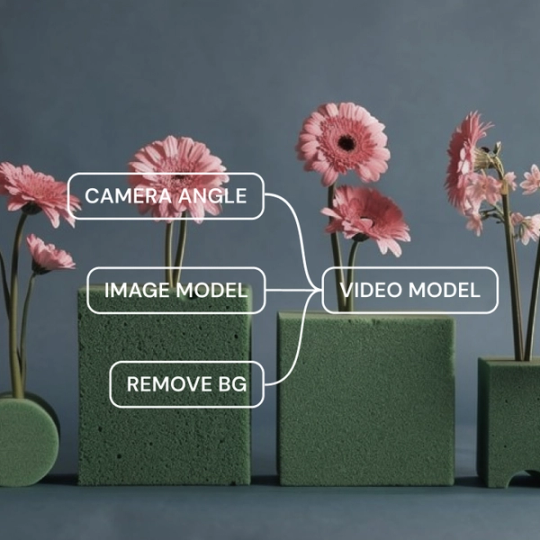
AI collage maker

Blend multiple images into a new style, and run it through any model.

Combine images your way, then generate

With Figma Weave, you can weight how much each reference image shapes the final style, then generate when the balance feels right.

  • Node-based workflows that keep you in control

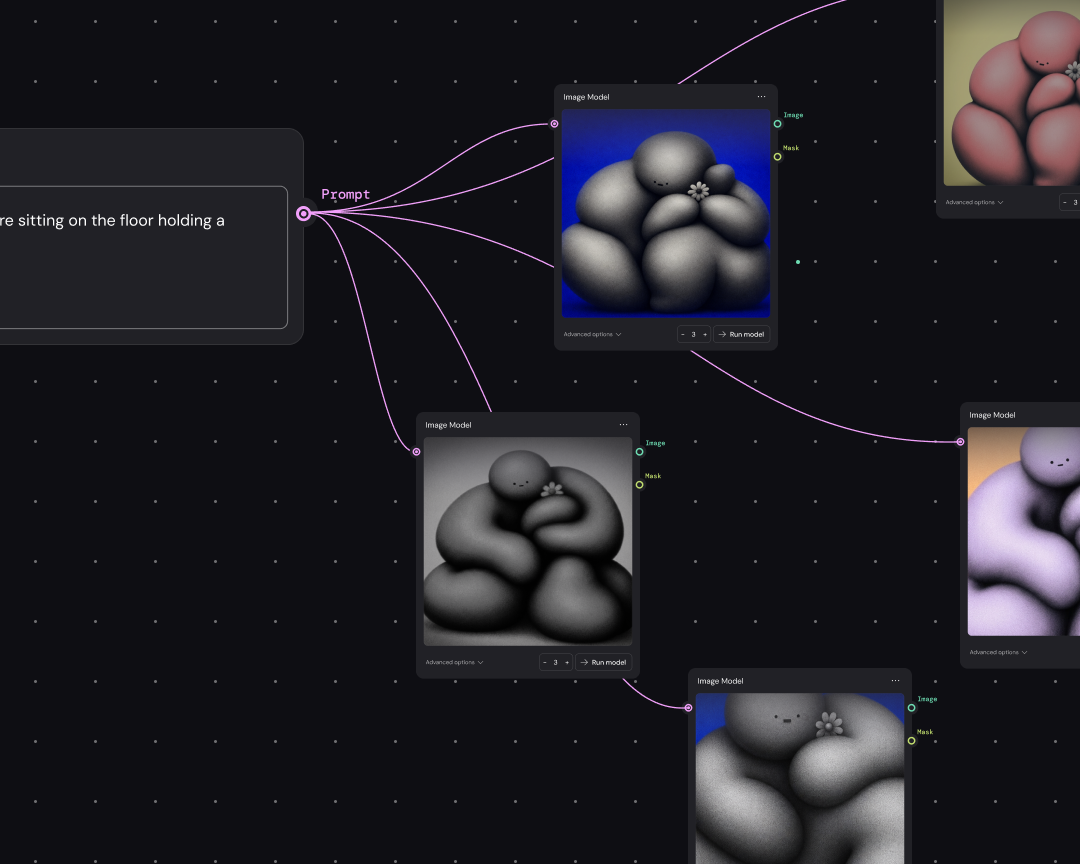
    Figma Weave is an AI image blender you can steer yourself. A node canvas shows you exactly how each reference image feeds into the final result, so you can adjust the balance until it looks right—no black box between inputs and what comes out.

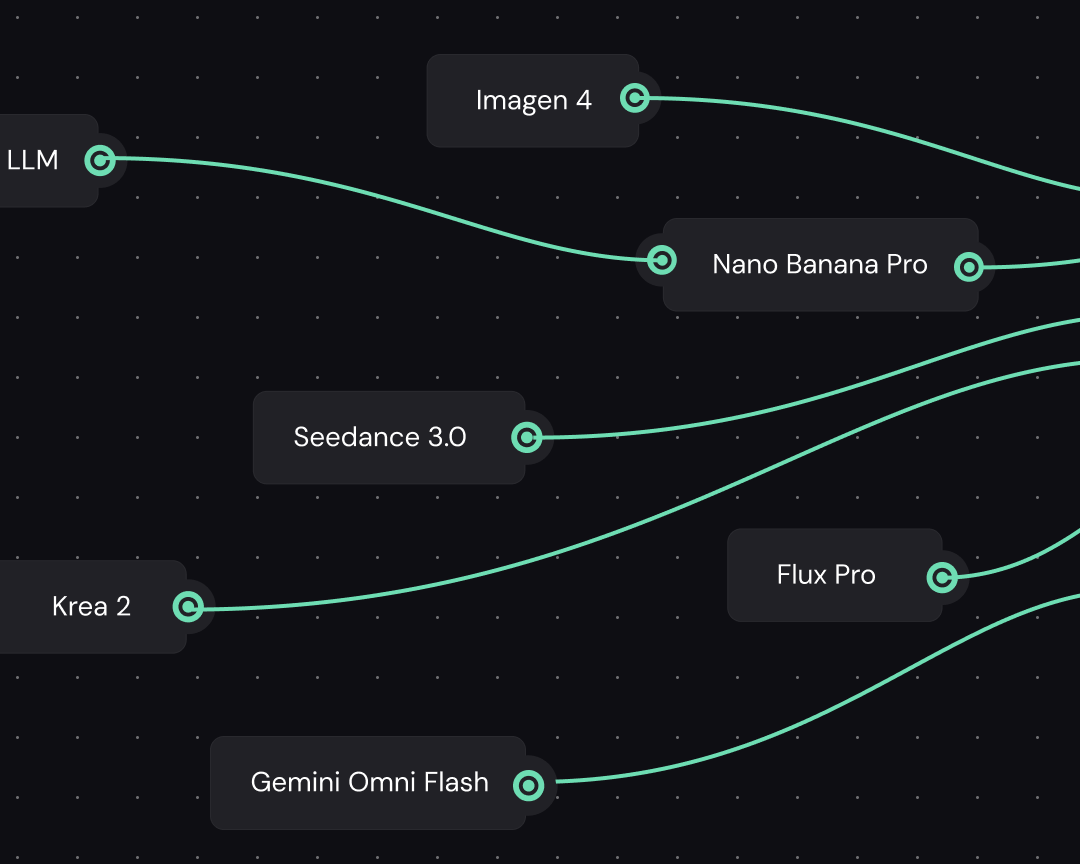
  • Every AI model on one canvas

    Run your blended style across multiple AI models in the same canvas. Compare outputs side by side and pick the version that gets closest to what you were after.

  • Professional editing built into the generation pipeline

    Once you generate an image, keep refining it in Figma Weave. Crop stray edges, mask out a section, or push the resolution higher, all in the same workflow that created it.

  • Build once. Scale across any volume.

    Turn your style into a reusable workflow for new images or variations. Running it again on new inputs takes a fraction of the time it took to set up, so one collage direction can cover an entire campaign.

How to create an AI collage with Figma Weave

Start a new workflow and upload the images you want to combine. These become the inputs each Image Describer node will analyze in the next step.

Run each uploaded image through its own Image Describer node. Figma Weave reads the texture, color, lighting, and composition of each one, then turns that into a written description you can edit.

Feed the descriptions into an Any LLM node and combine them into one style. Adjust the weight each reference carries so the mix leans toward whichever image should stand out more.

Send your result to several AI models at once. Each model interprets the same style a little differently, so you get a range of composites to compare.

Put your composites side by side and pick the one that works best. Crop, mask, or upscale it inside Figma Weave, then export it in the format you need.

Built by our community

See how the Figma Community is using Figma Weave to create AI-generated images, video, and 3D.

FAQ

Yes. You can upload images into Figma Weave, and each one feeds an Image Describer node that extracts its style. From there, the workflow controls how those styles combine into the final result.

You can export as PNG or JPG. Figma Weave’s export node keeps whatever format you generated in, so a PNG stays a PNG. Connect any result to the export node and choose where to save it.

Yes. When merging styles from multiple images in Figma Weave, you can weight each reference so one shapes the final result more than the other.

Chain as many Image Describer nodes into the workflow as the collage needs.

No. Figma Weave’s node canvas is visual, so you can build and adjust a workflow without writing code or learning how to use a traditional design tool. It just takes a little time to get comfortable moving between nodes.

Yes. You can skip reference images and generate a style directly from a written description using an Any LLM node, then send that style to any model.

Become an agent expert

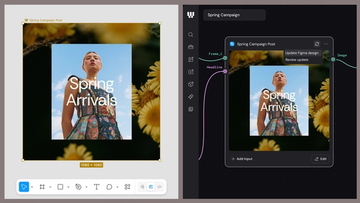
A “Spring Arrivals” campaign design shown in Figma Design beside its connected Figma node in Weave, with options to update the Figma design or review an update.A “Spring Arrivals” campaign design shown in Figma Design beside its connected Figma node in Weave, with options to update the Figma design or review an update.

The TL;DR on Figma Weave: Make your creative process repeatable

Figma Weave brings AI generation and editing tools together into connected, reusable workflows, giving you a process your team can shape, refine, and repeat. Here’s what it unlocks for creative teams and how to get the most out of it.

Learn more

Workflow lab: From design system to campaign in Figma Weave

Design systems can power more than just designs. This workflow shows you how to turn raw materials into brand campaign collateral using the Gen Effect and Figma nodes.

Learn more
Colorful abstract illustration of interlocking geometric shapes, including loops, arrows, a starburst, and grid patterns, suggesting connected tools and workflows.Colorful abstract illustration of interlocking geometric shapes, including loops, arrows, a starburst, and grid patterns, suggesting connected tools and workflows.

Try these 5 Weave tools—and share your own

Community publishing is now live for Weave tools. Here are a few tools that stand out, from turning a moodboard into a realistic room mockup to previewing your next nail set.

Learn more
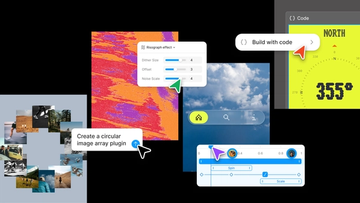
Collage-style product graphic showcasing AI-assisted design and development workflows, with plugin creation prompts, visual effect controls, code generation tools, and interactive UI components arranged across a creative workspace.Collage-style product graphic showcasing AI-assisted design and development workflows, with plugin creation prompts, visual effect controls, code generation tools, and interactive UI components arranged across a creative workspace.

Config 2026: New materials, new tools and a more expressive canvas

Push past what you thought was possible with code layers, Figma Motion, shaders, generative plugins and Weave tools, all on the canvas.

Learn more
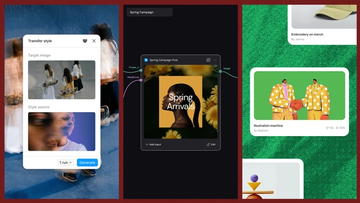
Three-panel product graphic demonstrating AI-powered style transfer. On the left, a "Transfer style" interface displays a target image of people carrying skateboards and a blurred portrait used as the style source. In the center, a workflow canvas labeled "Spring Campaign" shows a connected post-generation node producing a floral-themed social media graphic titled "Spring Arrivals." On the right, a gallery-style layout displays generated creative assets, including an illustrated handshake artwork and merchandise design cards, showing how transferred styles can be applied across a campaign.Three-panel product graphic demonstrating AI-powered style transfer. On the left, a "Transfer style" interface displays a target image of people carrying skateboards and a blurred portrait used as the style source. In the center, a workflow canvas labeled "Spring Campaign" shows a connected post-generation node producing a floral-themed social media graphic titled "Spring Arrivals." On the right, a gallery-style layout displays generated creative assets, including an illustrated handshake artwork and merchandise design cards, showing how transferred styles can be applied across a campaign.

Connecting Figma and Weave

Today, we’re announcing new ways your Weave creative workflows can live alongside your Figma frames.

Learn more

Direct every frame with Runway Aleph 2.0, now in Figma Weave

Aleph 2.0 brings frame-level creative direction to the Figma Weave canvas.

Learn more
Powered by Fruition