AI style mixing tool

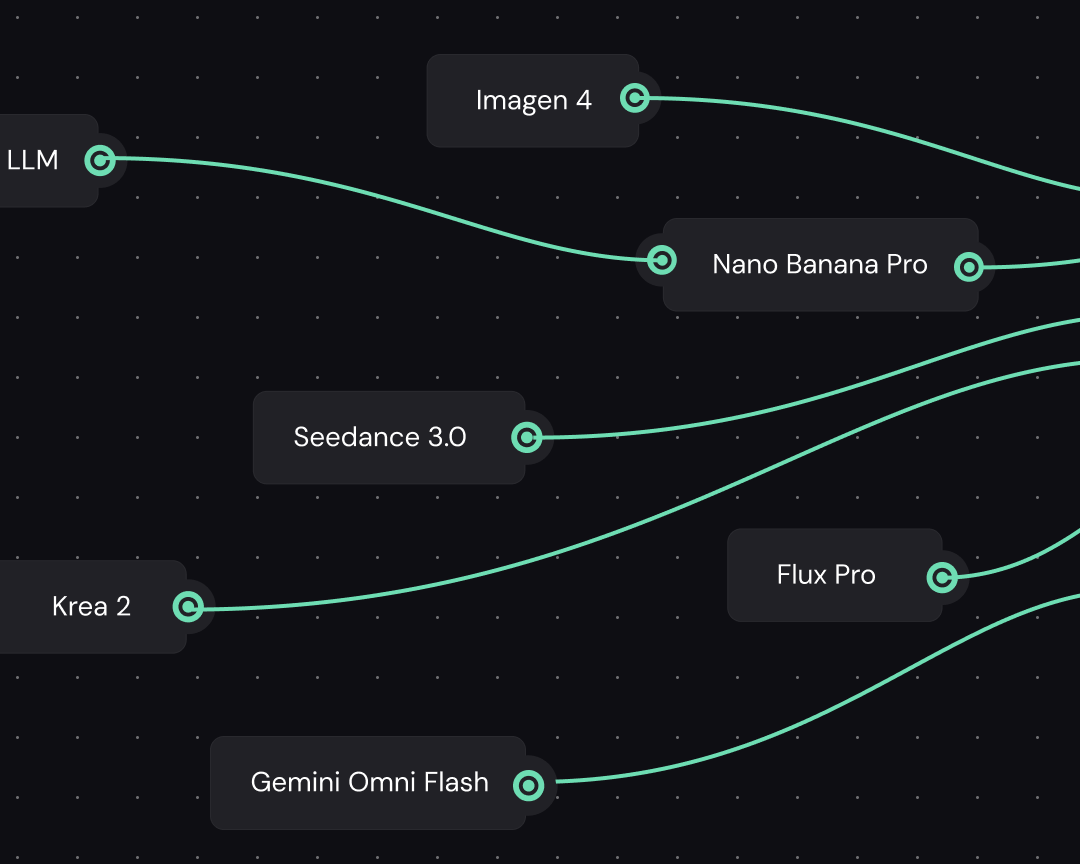
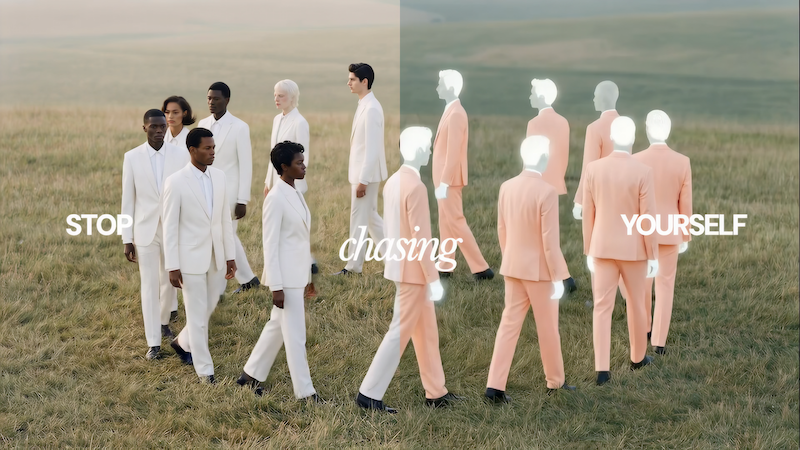
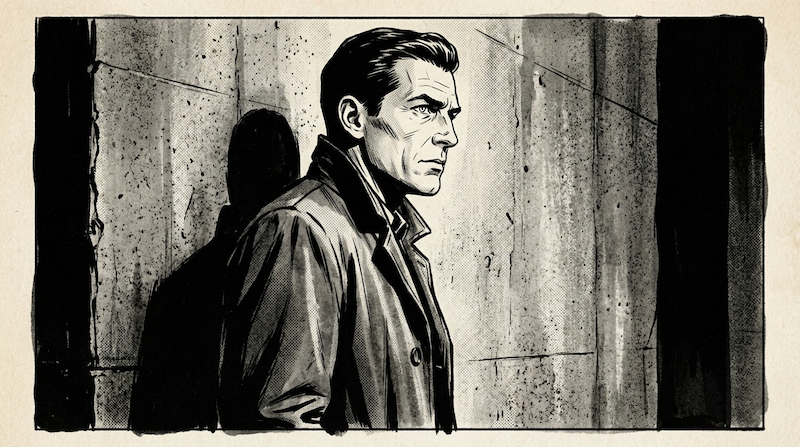
Blend artistic styles across every AI model, one canvas, no switching.

Combine styles with precision and control

Style mixing is more than a filter. Weave gives you a node-based pipeline to combine references, control how styles blend, and refine the output with professional editing tools—all in one place.

  • Refine the blend with real editing tools

    Style mixing rarely lands perfectly on the first pass. Weave's built-in masking, color grading, and compositing let you push the output further—adjusting where styles meet, how colors shift, and what stays sharp.

  • Share the style system, not just the result

    Publish your style mixing workflow as a simplified tool. Teammates add their own inputs and get results that follow your established blend—without needing to rebuild the logic or wait for your review.

  • Every model for every style

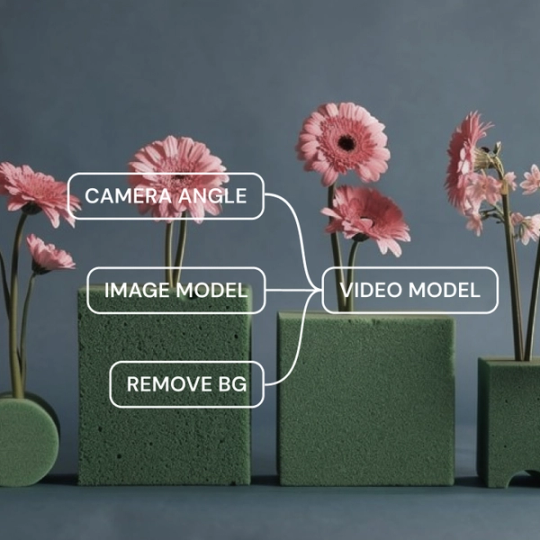
    Access image, video, and 3D models from providers like Runway, Luma, and Recraft. Try different models to see how each interprets your style references, then pick the one that matches your vision.

  • See exactly how styles combine

    Each reference, weight, and model choice lives as a visible node. Adjust the balance between styles, swap references in and out, and trace how your final output came together—no black-box guessing.

How to mix styles in Figma Weave

Bring in the visual references you want to combine—illustration styles, photographic treatments, painterly textures. Connect them to the AI models that interpret style blending best for your project.

Add nodes to control how styles mix: adjust reference weights, layer outputs, mask regions, or composite selectively. Your creative decisions become visible, adjustable steps in the workflow.

Run the pipeline and see where the blend lands. Swap a model, shift a weight, refine with color grading. Keep iterating until the style fusion matches what you had in mind.

Built by our community

See how the Figma Community is using Figma Weave to create AI-generated images, video, and 3D.

FAQ

An AI style mixing tool combines visual references from different artistic styles to create hybrid outputs. Figma Weave approaches this through a node-based canvas where you control how references blend, which models interpret them, and how the output gets refined.

Weave lets you connect multiple style references to AI generation nodes, then adjust how they influence the output through weights and layering. You can see every step of the blending process and refine results with built-in editing tools.

Add both style references to your Weave canvas, connect them to a generation node, and adjust how much each reference influences the output. Build additional nodes for masking or compositing if you want different styles to apply to different regions.

Yes. Figma Weave gives you access to multiple AI models that interpret style references differently. You can experiment with which model handles your specific style combination best, then refine the blend with professional editing tools.

You can get started with Figma Weave for free. Advanced features and higher usage are available on paid plans. The free tier lets you explore the node-based canvas and test style mixing workflows before committing.

The best approach depends on your styles and goals. Weave lets you try different models, adjust reference weights, and use masking to control where each style appears—giving you more precision than single-prompt tools that collapse everything into one guess.

Become an agent expert

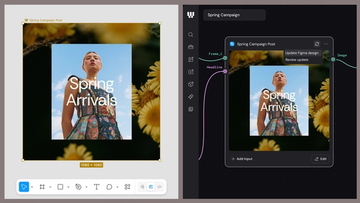
A “Spring Arrivals” campaign design shown in Figma Design beside its connected Figma node in Weave, with options to update the Figma design or review an update.A “Spring Arrivals” campaign design shown in Figma Design beside its connected Figma node in Weave, with options to update the Figma design or review an update.

The TL;DR on Figma Weave: Make your creative process repeatable

Figma Weave brings AI generation and editing tools together into connected, reusable workflows, giving you a process your team can shape, refine, and repeat. Here’s what it unlocks for creative teams and how to get the most out of it.

Learn more

Workflow lab: From design system to campaign in Figma Weave

Design systems can power more than just designs. This workflow shows you how to turn raw materials into brand campaign collateral using the Gen Effect and Figma nodes.

Learn more
Colorful abstract illustration of interlocking geometric shapes, including loops, arrows, a starburst, and grid patterns, suggesting connected tools and workflows.Colorful abstract illustration of interlocking geometric shapes, including loops, arrows, a starburst, and grid patterns, suggesting connected tools and workflows.

Try these 5 Weave tools—and share your own

Community publishing is now live for Weave tools. Here are a few tools that stand out, from turning a moodboard into a realistic room mockup to previewing your next nail set.

Learn more
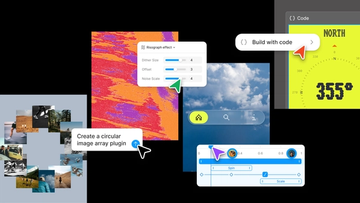
Collage-style product graphic showcasing AI-assisted design and development workflows, with plugin creation prompts, visual effect controls, code generation tools, and interactive UI components arranged across a creative workspace.Collage-style product graphic showcasing AI-assisted design and development workflows, with plugin creation prompts, visual effect controls, code generation tools, and interactive UI components arranged across a creative workspace.

Config 2026: New materials, new tools and a more expressive canvas

Push past what you thought was possible with code layers, Figma Motion, shaders, generative plugins and Weave tools, all on the canvas.

Learn more
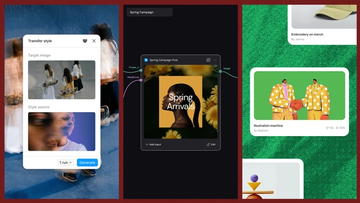
Three-panel product graphic demonstrating AI-powered style transfer. On the left, a "Transfer style" interface displays a target image of people carrying skateboards and a blurred portrait used as the style source. In the center, a workflow canvas labeled "Spring Campaign" shows a connected post-generation node producing a floral-themed social media graphic titled "Spring Arrivals." On the right, a gallery-style layout displays generated creative assets, including an illustrated handshake artwork and merchandise design cards, showing how transferred styles can be applied across a campaign.Three-panel product graphic demonstrating AI-powered style transfer. On the left, a "Transfer style" interface displays a target image of people carrying skateboards and a blurred portrait used as the style source. In the center, a workflow canvas labeled "Spring Campaign" shows a connected post-generation node producing a floral-themed social media graphic titled "Spring Arrivals." On the right, a gallery-style layout displays generated creative assets, including an illustrated handshake artwork and merchandise design cards, showing how transferred styles can be applied across a campaign.

Connecting Figma and Weave

Today, we’re announcing new ways your Weave creative workflows can live alongside your Figma frames.

Learn more

Direct every frame with Runway Aleph 2.0, now in Figma Weave

Aleph 2.0 brings frame-level creative direction to the Figma Weave canvas.

Learn more
Powered by Fruition