How GovTech Singapore teams use Figma in designing digital public services
The Government Technology Agency of Singapore (GovTech Singapore) is the lead agency driving Singapore’s Smart Nation initiative and public-sector digital transformation. It develops digital products, platforms and infrastructure, and works with government agencies to deliver secure, reliable and user-centric digital services.
Teams use shared platforms, standards and reusable components where relevant, while adapting their work to different policy, operational and user needs. Figma is one of the tools used by some GovTech product teams for design and cross-functional collaboration.
A shared workspace for product design
GovTech product teams work across different services, platforms and user contexts. Their design processes need to support collaboration across disciplines while allowing each team to address the requirements of its product.
Within teams that use Figma, designers, product managers and engineers can review user journeys, interface designs and prototypes in a shared workspace. Teams also use it to document reusable components and guidance for their products. This helps teams move faster while creating more consistent digital experiences across the government.
Figma supports our efforts to build more consistent design foundations within and across products, while still allowing teams to adapt their solutions to different users’ needs.
— Chang Sau Sheong, Deputy Chief Executive and Chief Technology Officer, GovTech Singapore
Singpass: Applying shared design foundations
Singpass, Singapore’s national digital identity, is one example of a GovTech product team using Figma as part of its design workflow. Singpass supports authentication and other digital identity services used by government agencies and private-sector organisations.
With more than 4.5 million active accounts, 1,300+ partners, 2,700+ integrated services and 18 million+ monthly transactions, even a small design decision can affect millions of interactions over time. That makes consistency, clarity and trust central to how the team designs.
For the Singpass team, consistency does not simply mean making every interface identical. Mobile, web and partner-facing products have different interaction models, behaviours and accessibility needs. Instead, the team centralises the intent behind a pattern while allowing its implementation to adapt to the context.
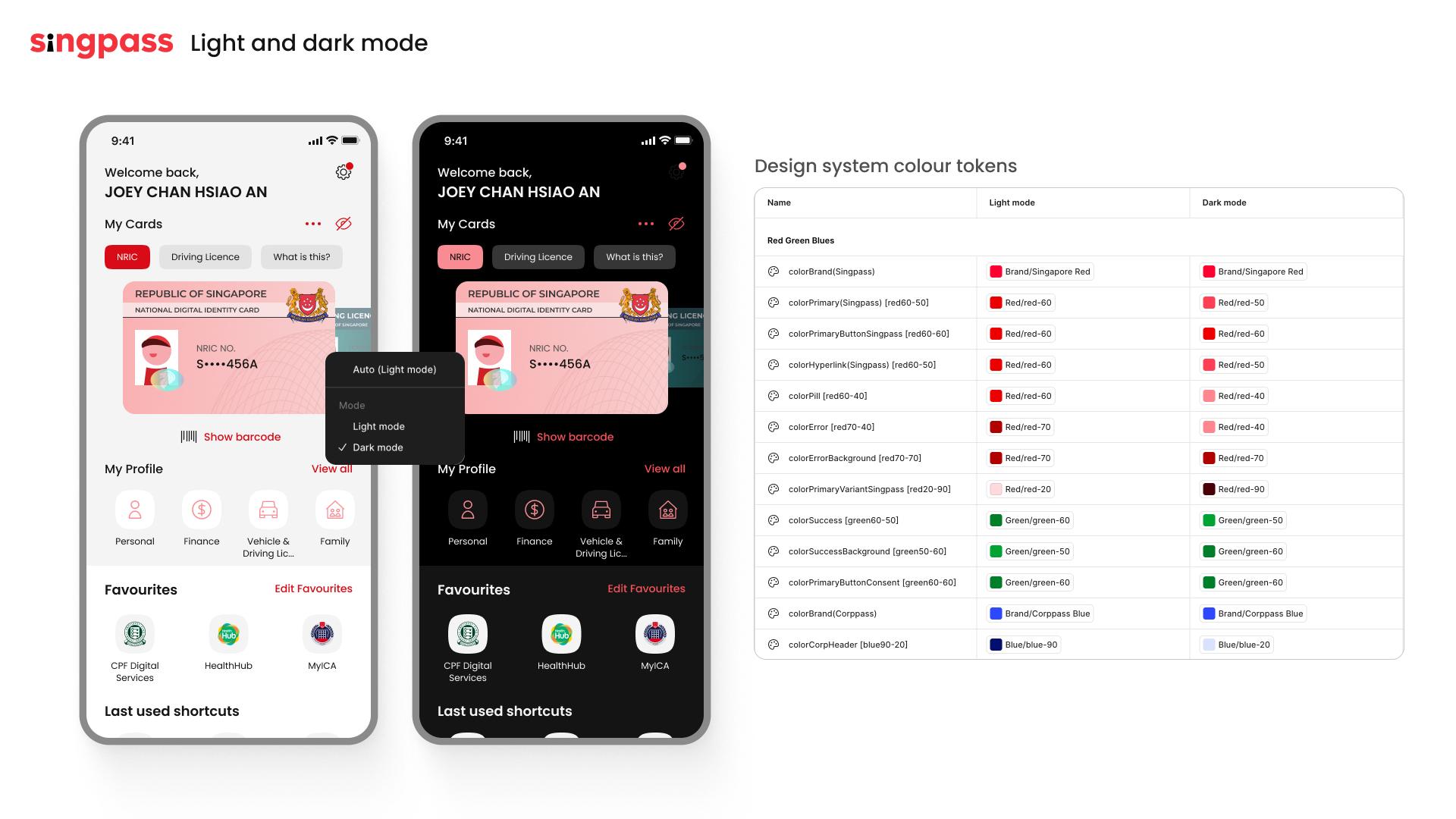
The Singpass design system captures that shared intent in Figma. One core file contains foundation styles including colour tokens, typography and variables, while another contains reusable components such as buttons, navigation, tables and patterns, together with usage and accessibility guidance.
Our patterns, behaviours, rationale and guidelines live in Figma as our source of truth for the team. That’s where we align on what something means, why it exists and how it should behave in context.
— Evelyn Ng, Designer, Singpass, GovTech Singapore
The Singpass design system supports the product’s own services and channels. It illustrates how a GovTech product team documents reusable patterns and guidance while adapting designs to different platforms and user journeys.
From early exploration to a shared reference
The Singpass team uses Figma artefacts as a shared reference across design and cross-functional discussions involving product managers and engineers. This keeps designs, decisions and feedback visible as work progresses.
Depending on the project, the team uses FigJam for activities such as journey mapping and early ideation, and Figma Design for interface design, prototyping and review. These practices are adapted to the requirements of each project.
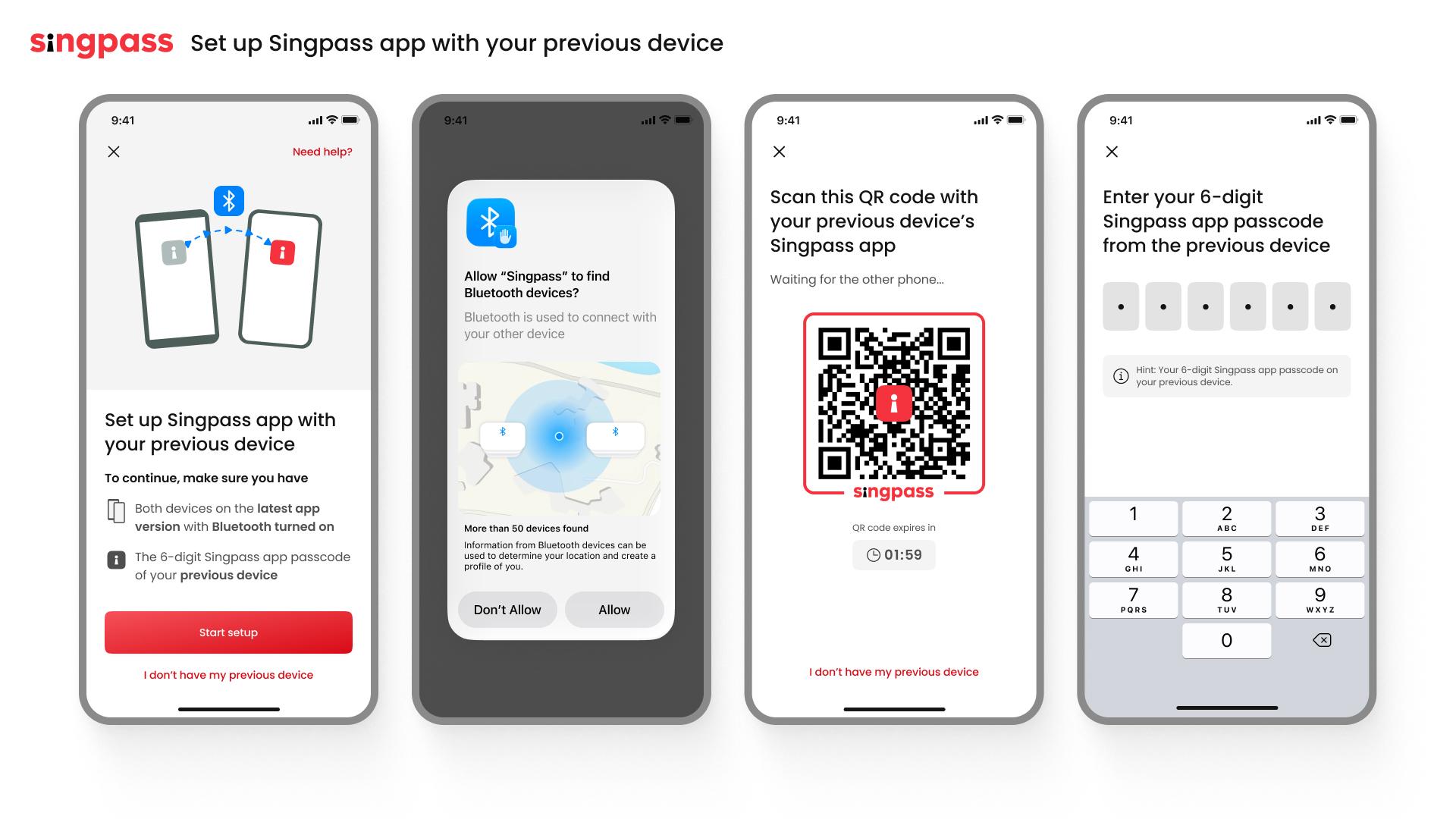
For Singpass App-to-App Setup, the team used design artefacts and prototypes to develop and review the user journey before implementation. The approved artefacts were also used to support operational preparation, including helpdesk training, without recreating separate visual documentation.
This allowed the same approved design artefacts to support both product development and operational preparation.
Documenting reusable design decisions
When Singpass introduced Light and Dark modes in its app, the design system’s colour tokens served as a common reference for designers and engineers.
The design system also documents reusable components and guidance for recurring interface patterns. Teams can use these as a starting point and adapt them where the user journey or platform requires a different treatment.
This gives design and engineering teams an agreed reference for common elements, while leaving them to focus on service-specific flows, content and requirements.
For GovTech, the Singpass example illustrates how a product team can use documented design foundations to support consistency within a multi-touchpoint service, while adapting designs to different channels and user needs.
Documenting tested and approved patterns allows teams to reuse established design decisions where relevant. This supports consistency within the product while allowing teams to address service-specific requirements.
Exploring AI-assisted prototyping
Separately, GovTech teams are also exploring AI-assisted tools for ideation and prototyping. Rather than introducing AI as a separate workflow, teams are exploring how new capabilities can be integrated into existing collaboration and governance practices.
Figma Make provides one example of how that experimentation can become tangible. Teams can rapidly prototype and communicate concepts, helping stakeholders evaluate ideas earlier and more concretely before significant engineering investment is required.
That ability to test ideas more easily sits alongside GovTech’s emphasis on responsible experimentation. As its product, design and engineering roles continue to evolve, the objective is not simply to introduce new tools, but to create structures that let teams explore new approaches while maintaining reliability and trust.
As we explore new approaches in product design, the priority is to move thoughtfully – experimenting where it makes sense while keeping people safe and public services trustworthy.
— Chang Sau Sheong, Deputy Chief Executive and Chief Technology Officer, GovTech Singapore
Looking ahead
GovTech’s objective is to deliver secure, reliable, accessible and user-centric digital services. Product teams use tools, standards and reusable components where relevant, while remaining accountable for the products they design, build and operate.
For product teams, Figma supports collaboration, prototyping and the documentation of design decisions within its product workflow. The examples in this story show how GovTech uses shared design foundations while adapting its work to different platforms and user needs.
See how Figma can help you scale design
Get in touch to learn more about how Figma can help companies scale design.
See how Figma can help you scale design
Great design has the potential to differentiate your product and brand. But nothing great is made alone. Figma brings product teams together in a fast and more inclusive design workflow.
Get in touch to learn more about how Figma can help companies scale design.
We’ll cover how Figma can help:
- Bring every step of the design process—from ideation, to creation, to building designs—into one place
- Accelerate design workflows with shared company-wide design systems
- Foster inclusivity in the product team process with products that are web-based, accessible, and easy to use